Nuclear and Atomic Physics

Intensity noise measure device

dem38.jpg

A device for measuring the intensity of noise, music, and other sounds. A typical meter consists of a microphone for picking up the sound and converting it into an electrical signal, followed by electronic circuitry for operating on this so that the desired characteristics can be measured. The indicating device is usually a meter calibrated to read the sound level in decibels (dB; a logarithmic unit used to measure the sound intensity).

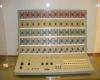
Radiometer

dem40.jpg

Wave bands n.a.

Power type and voltage Alternating Current supply (AC)

Model: Multimeter MM1m (MM 1 m) Material Metal case

Shape Tablemodel, with any shape - general.

Dimensions (WHD) 335 x 285 x 190 mm / 13.2 x 11.2 x 7.5 inch

Ion Producing Apparetus

dem28.jpg

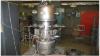
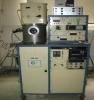
Ion implantation is a materials engineering process by which ions of a material can be implanted into another solid, thereby changing the physical properties of the solid. Ion implantation is used in semiconductor device fabrication and in metal finishing, as well as various applications in materials science research. The ions introduce both a chemical change in the target, in that they can be a different element than the target, and a structural change, in that the crystal structure of the target can be damaged or even destroyed by the energetic collision cascades.

X-Ray scattering apparatus

dem26.jpg

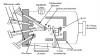
X-ray scattering techniques are a family of non-destructive analytical techniques which reveal information about the crystallographic structure, chemical composition, and physical properties of materials and thin films. These techniques are based on observing the scattered intensity of an X-ray beam hitting a sample as a function of incident and scattered angle, polarization, and wavelength or energy.

Materials strenght meesuring device

dem25.jpg

This device is used for the measurement of strength (e.g. compressive and tensile) of materials. Compression strength tests measure mechanical compressive strength and materials properties such as yield strength, modulus, ultimate strength, possons ratio and per cent strain to failure. Specimens are fixtured in multiple ways including the use of compression platens, spherical seat platens, cages, and bend or flexural fixtures. Test parameters to configure a test system include load, speed of loading, test method type, sample geometry, and maximum sample deflection.

Syndicate content

Copyright National Hellenic Research Foundation - National Observatory of Athens